> For the complete documentation index, see [llms.txt](https://docs.reflag.com/llms.txt). Markdown versions of documentation pages are available by appending `.md` to page URLs; this page is available as [Markdown](https://docs.reflag.com/product-handbook/feature-clean-up-and-archival-beta.md).
# Flag clean-up and archival
Managing the flag lifecycle in Reflag is straightforward with the clean-up guide, notifications, and automatic clean-up pull requests.
## Stale flags
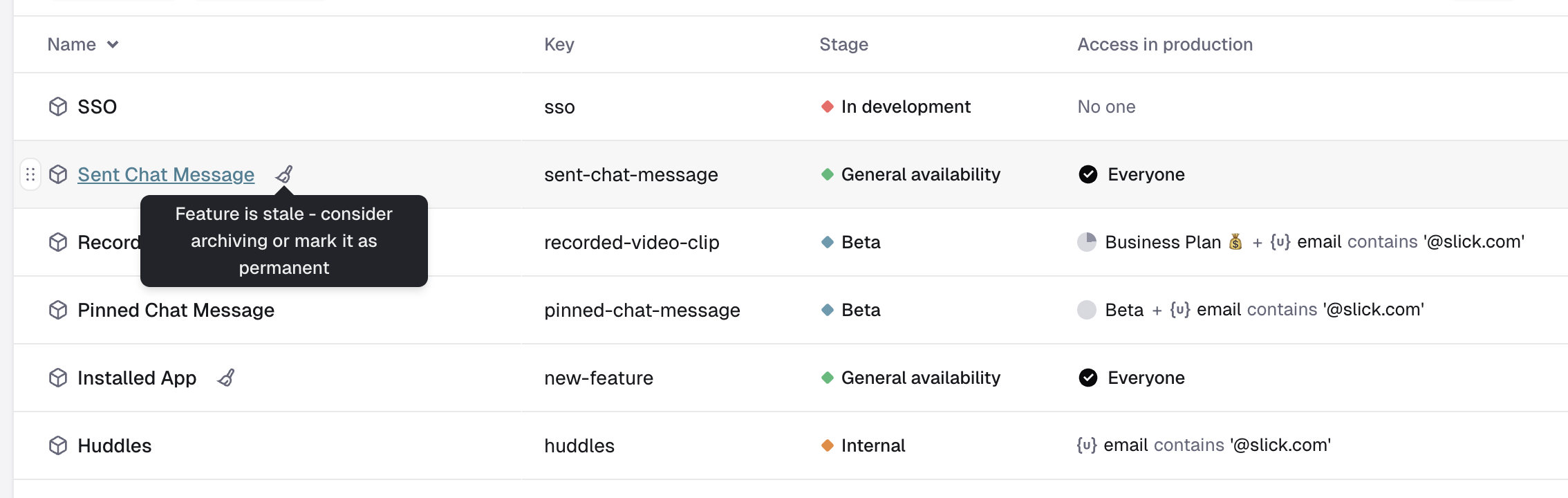
After flags have been rolled out to everyone, they turn stale after a set period of time. Stale flags show a broom next to their name. You also receive a Slack notification if that integration is enabled.
## Stale flags view
The stale flags view shows all flags that are currently stale and what still needs to happen before they can be archived.
## Clean-up guide
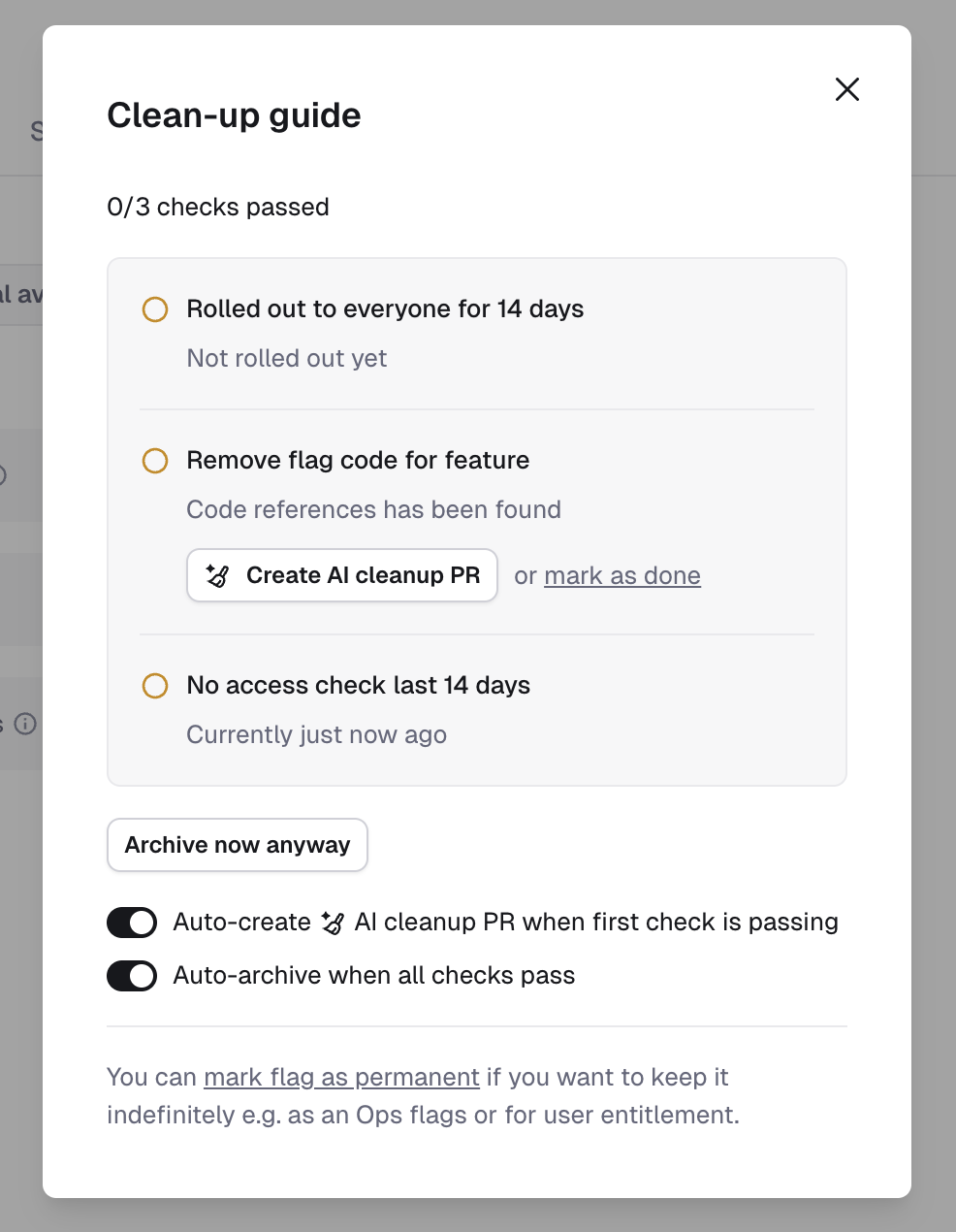
Open a flag and find the built-in "Clean-up guide". It walks you through the steps required to archive a flag safely.
There are three **checks** that must pass before the flag is safe to archive:
* Stale: the flag was rolled out to everyone some time ago
* Flag removed from the code in a GitHub repository
* No access checks for some time
There are two **automations** that can be enabled at the flag level:
* Auto-creating a Pull Request once the flag turns stale
* Auto-archiving once all checks pass
See [AI code clean-up](/product-handbook/feature-clean-up-and-archival-beta/ai-code-clean-up-beta.md) for more on automating code clean-up.
## Organization clean-up settings
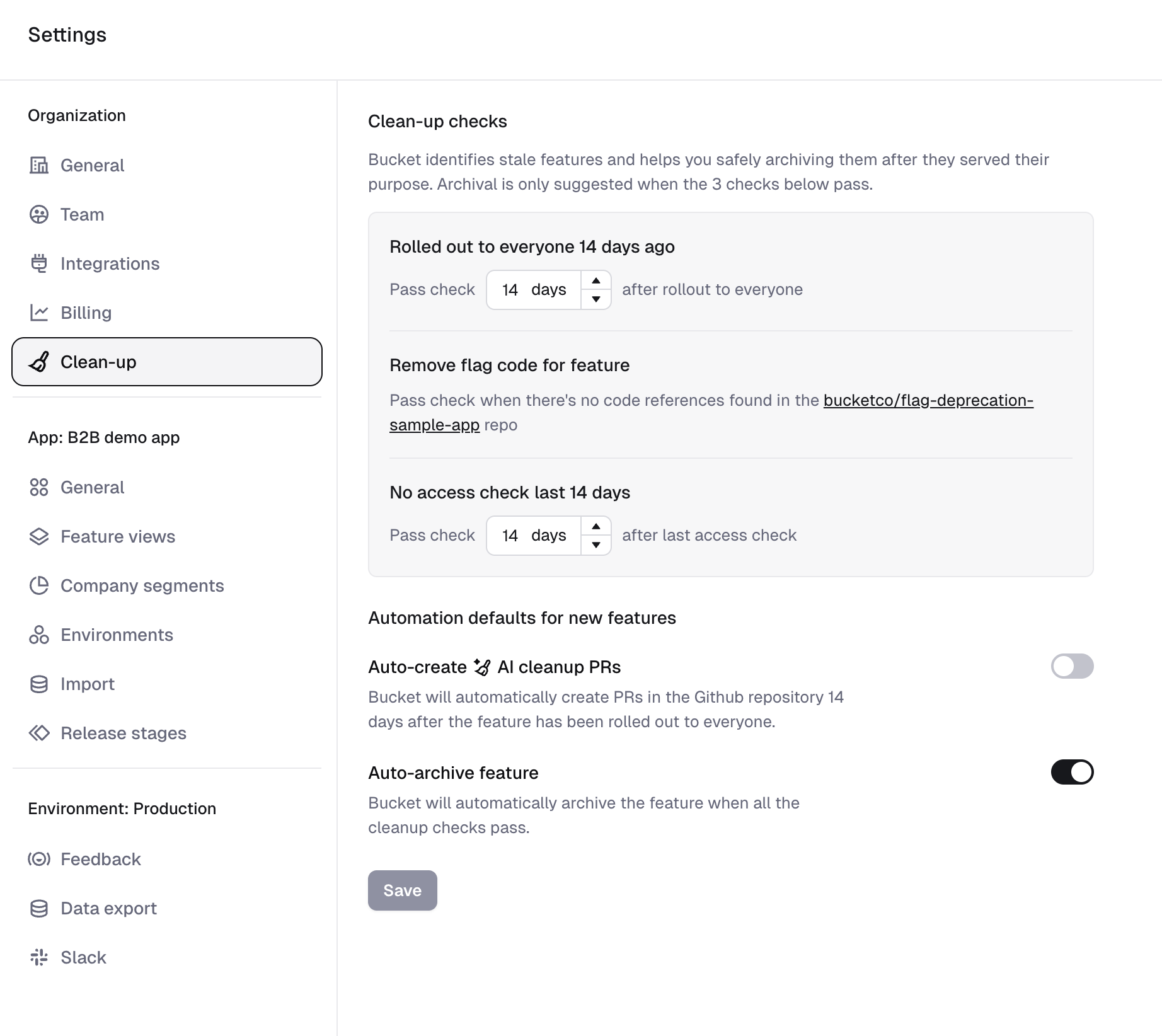
In organization settings, you control the requirements for each check to pass:
* Configure how soon after rollout flags should be considered stale
* If GitHub is connected, you'll see which repository will be checked for the presence of flags
* How long to wait for the last access check
You can also set the default automation settings for newly created flags.
---
# Agent Instructions
This documentation is published with GitBook. GitBook is the documentation platform designed so that both humans and AI agents can read, navigate, and reason over technical content effectively. Learn more at gitbook.com.
## Querying This Documentation
If you need additional information that is not directly available in this page, you can query the documentation dynamically by asking a question.
Perform an HTTP GET request on the following URL with the `ask` and `goal` query parameters:
```
GET https://docs.reflag.com/product-handbook/feature-clean-up-and-archival-beta.md?ask=&goal=
```
`ask` is the immediate question: it should be specific, self-contained, and written in natural language.
`goal` is what the user is ultimately trying to achieve, the reason they need the answer. Sharing it helps GitBook give you a better, more relevant answer. A goal is most helpful when it describes the outcome the user wants rather than restating the question. For example, with `ask=how do I create an API token`, a goal like `build a script that syncs our docs to a CMS` lets GitBook tailor the answer to that use case.
The response will contain a direct answer to the question and relevant excerpts and sources from the documentation.
Use this mechanism when the answer is not explicitly present in the current page, you need clarification or additional context, or you want to retrieve related documentation sections.